Nearly 2 billion credentials exposed in a publicly accessible database

What the exposed database contained
I recently discovered a publicly exposed database that was neither password-protected nor encrypted. It contained approximately 2 billion credentials, including email addresses, login names, passwords, and more. In a limited sample of the records I reviewed, I observed logs that may contain saved application credentials, browser passwords, cookies, session tokens, authentication artifacts, device information, and other application identifiers.
In volume and scope, this is the largest collection of credentials I have discovered in my years as a security researcher, and it reinforces the growing threat that malware poses globally. This 2 billion record dataset is more than 13 times the size of a previous exposure of 149 million logins and passwords I reported earlier this year. That dataset was mostly limited to usernames, passwords, and login URLs. This one goes further, with session tokens, cookies, and device data that give attackers more ways in than a password alone.
The database contained 8,471 folders with credentials and account information in plaintext. Some documents were segmented by country and included abbreviations in the file names, such as US, UK, FR, DE, ES, and MX. An estimated 400,000 documents appeared to come from more advanced malware that created separate folders for individual victims. These included folders named applications, cookies, edge, important files, and operating systems, as well as .txt documents labeled system, process, clipboard, brute force, passwords, and more. Together, these could provide a detailed profile of each victim and their devices and accounts, revealing a much wider range of potential attack paths beyond those available through username, login URL, and password data alone.
I also observed thousands of Tor .onion addresses associated with account names and passwords. The Tor .onion services are generally categorized as part of the dark web, and these credentials could potentially provide access to private forums, marketplaces, communication platforms, or other hidden services. While .onion accounts alone do not imply criminal or malicious activity, it is estimated that as much as 60% of dark web sites host illegal material and illicit activities. This is the first time I have seen a large number of dark web accounts in breached credentials. It should be noted that legitimate organizations, journalists, whistleblower platforms, and news organizations also operate .onion services to provide anonymity and bypass censorship.
The database contained no information identifying who owned or managed the exposed records. The files referenced or indicated multiple suspected cybercriminal data sources or underground credential operations as the original sources. I immediately reported my discovery to the hosting provider, and public access was restricted several days later. While I did not download the exposed files, they remained publicly accessible long enough for me to query common domains and extensions, estimate account totals, and put the discovery into perspective by domain or service.
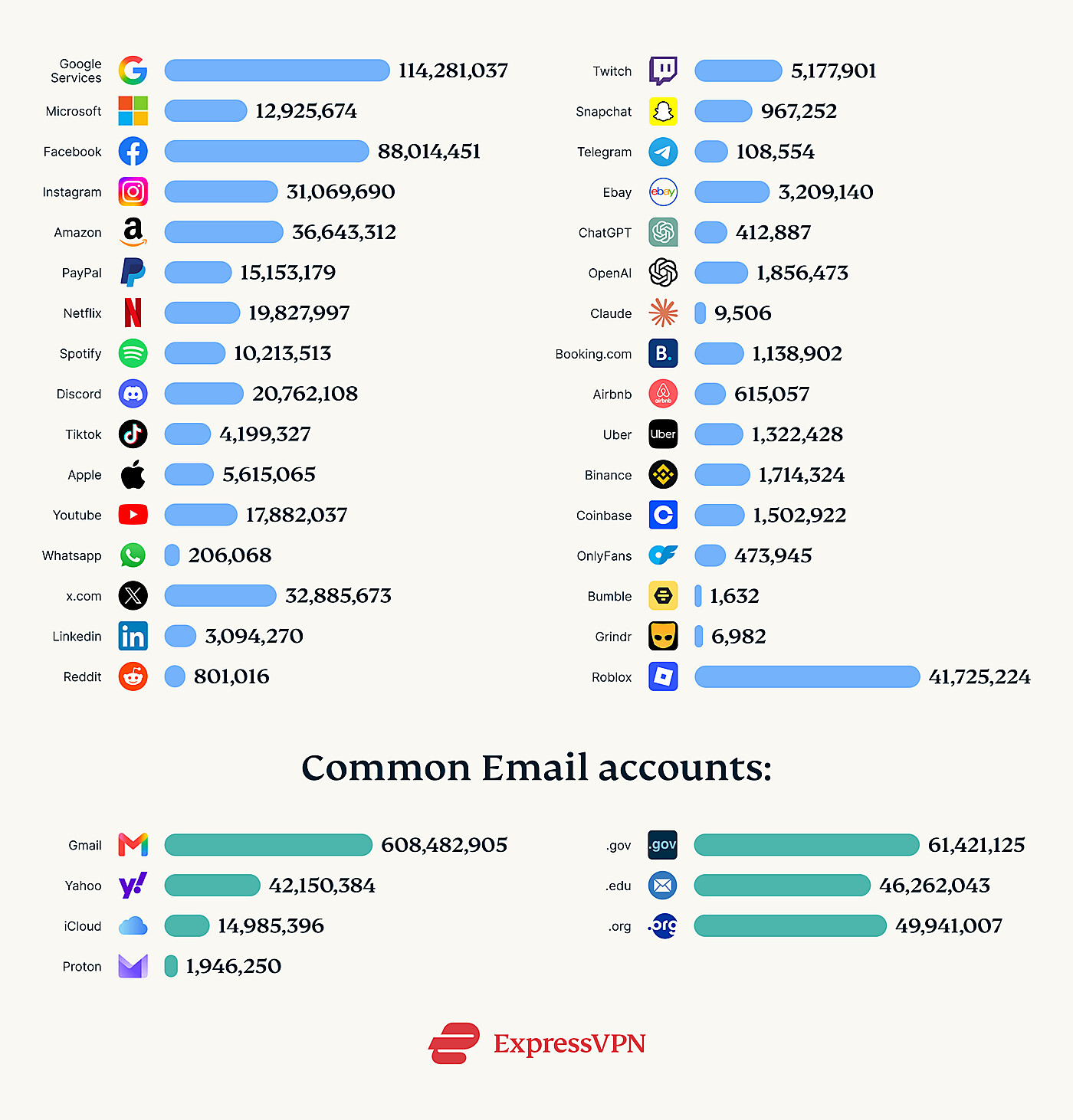
Estimated records by service and domain
Some compromised accounts may appear in multiple documents, so the counts may include duplicates. The following estimates are based on queries counting individual lines containing specific domain names. These counts may also overlap across services or include multiple accounts belonging to the same user. They provide an estimate of potentially affected accounts within the database.
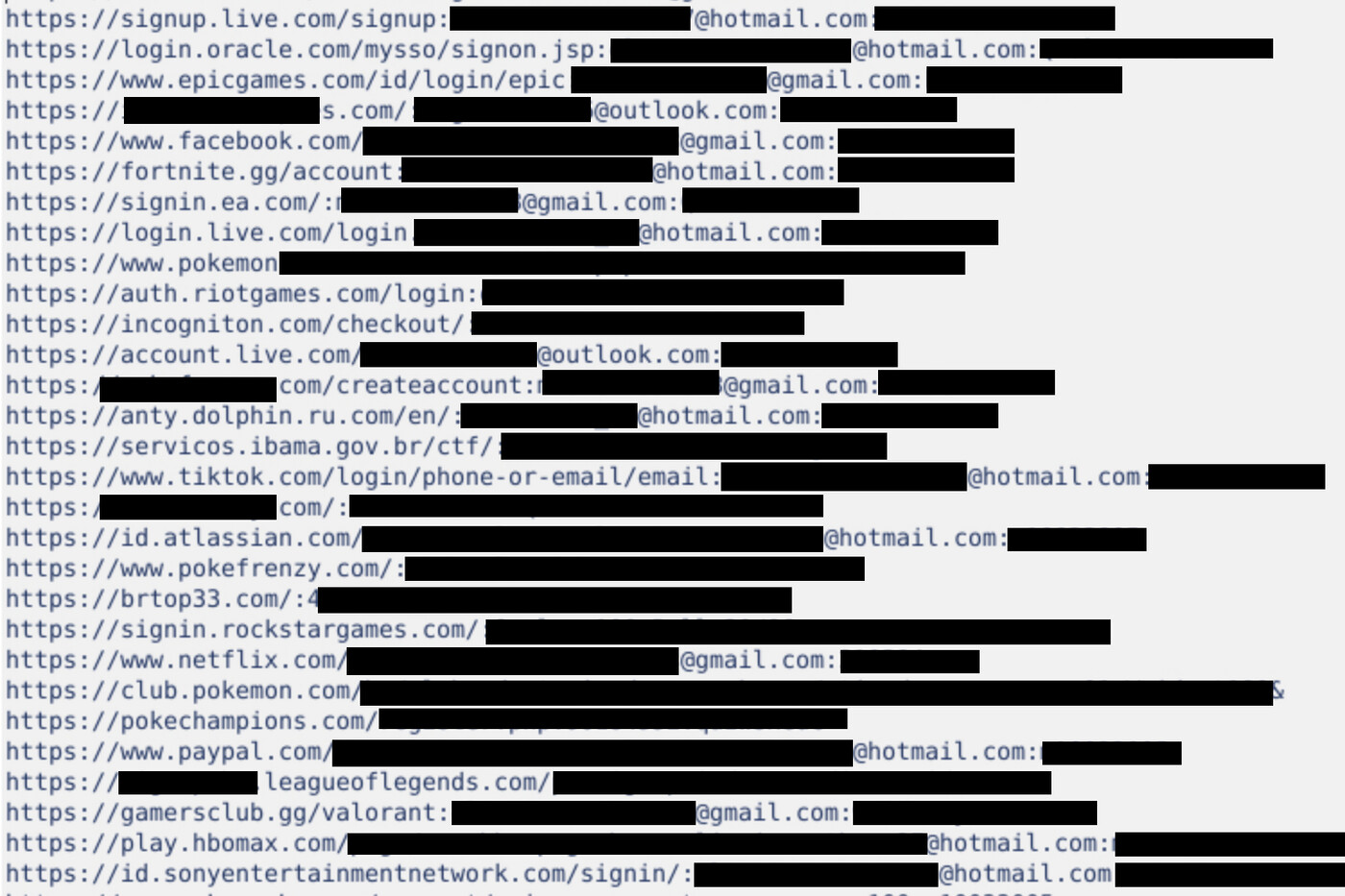
This screenshot shows an example of how the usernames, emails, passwords, and associated web services appeared in the exposed documents.
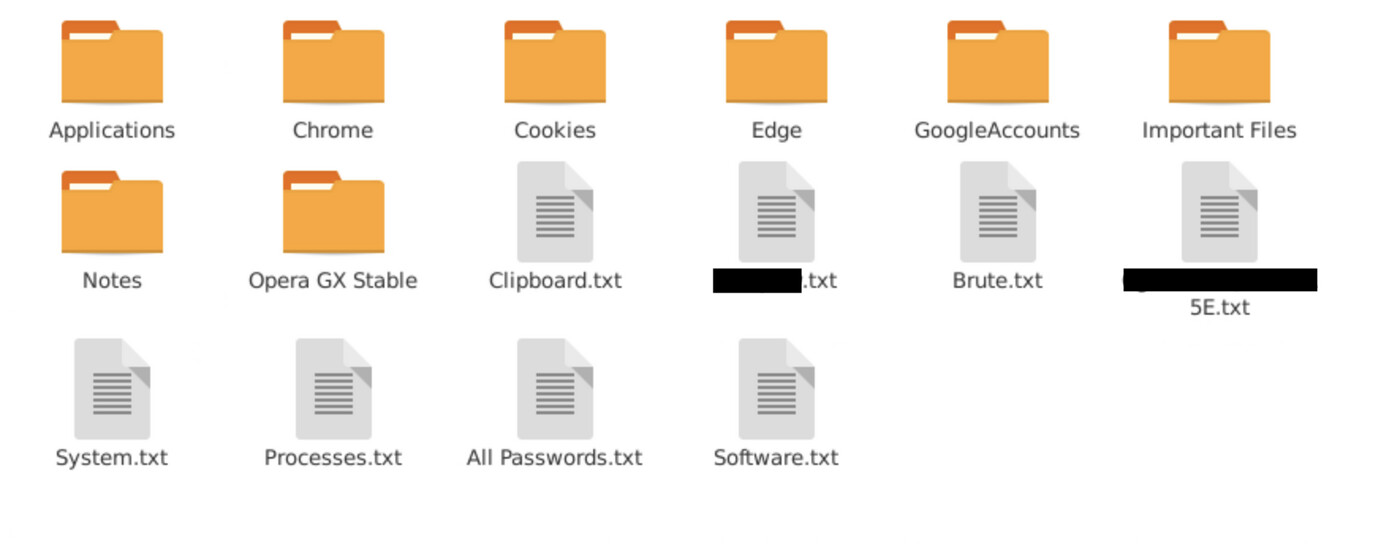
This screenshot shows an individual folder containing files created by more advanced malware that captured detailed information from the user’s device and accounts.
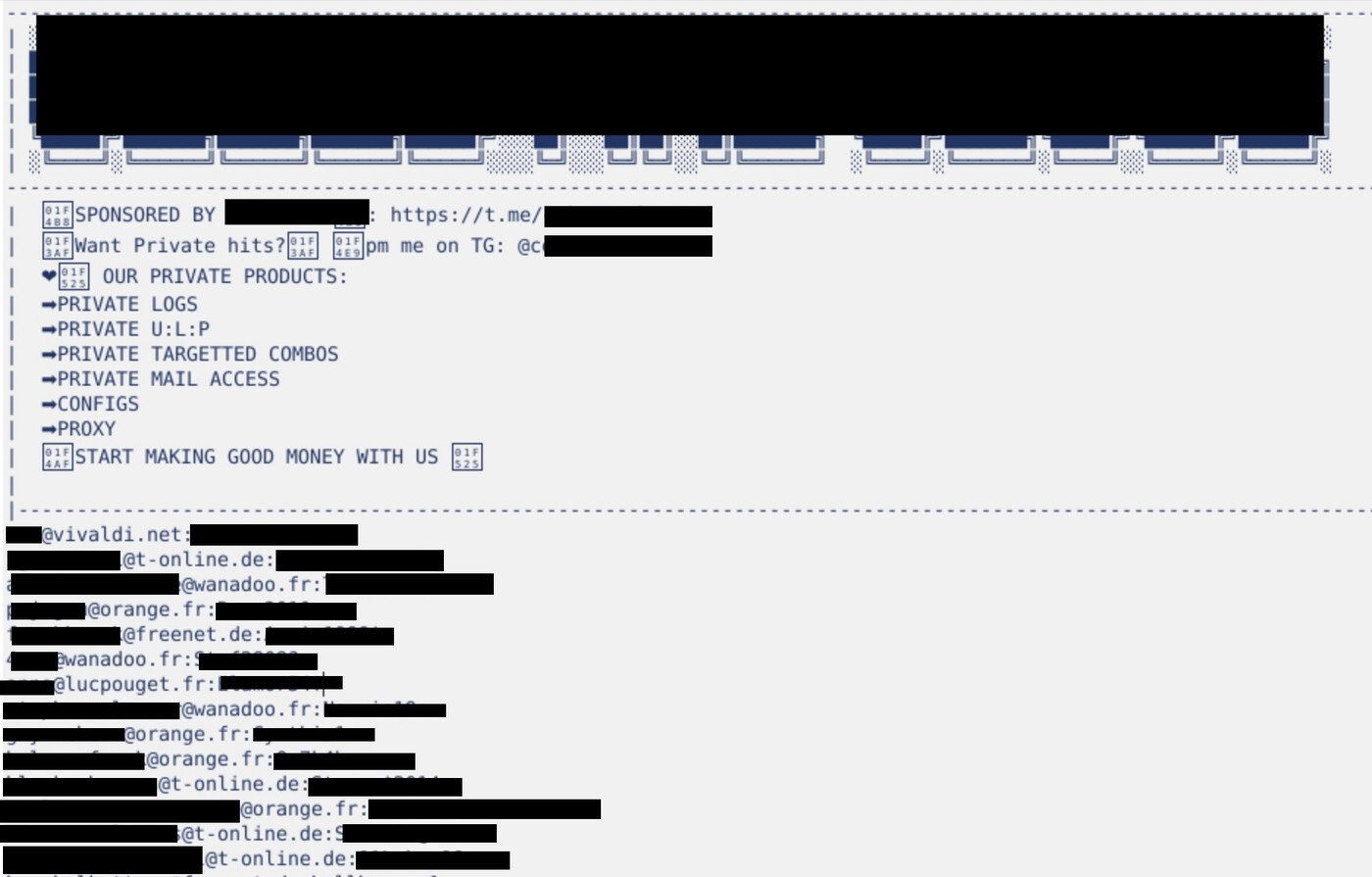
This screenshot shows how a number of the files were branded and included Telegram channels and contacts.
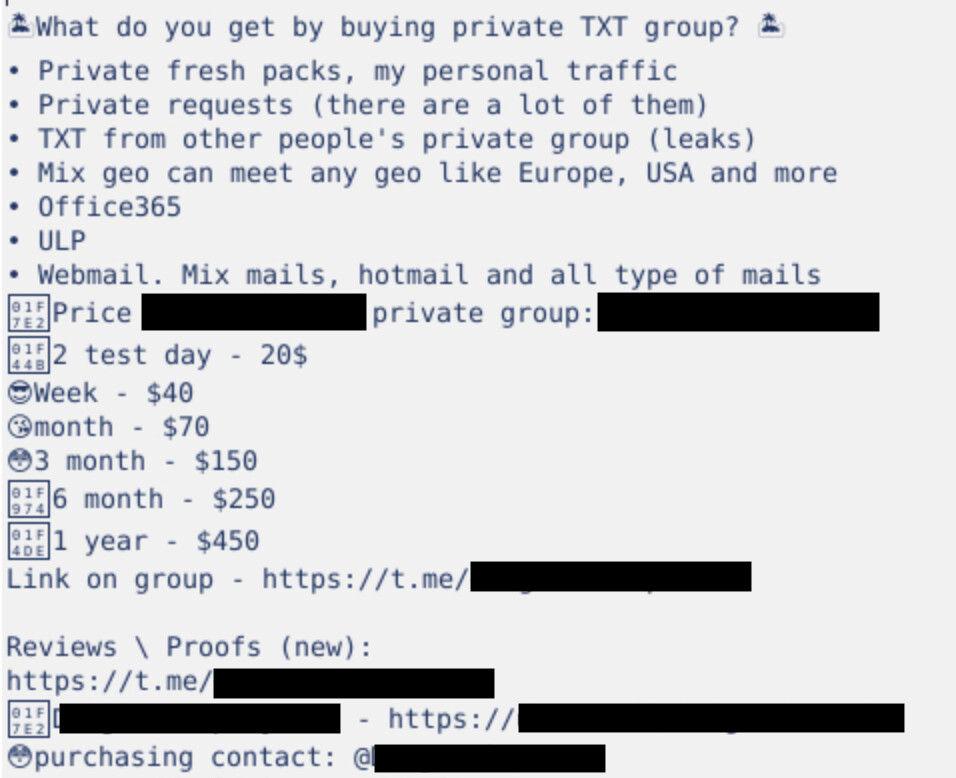
This screenshot shows a promotional message from a group offering access to geo-targeted emails and outlining its pricing models.
Possible explanations for the collection
There are several possible explanations for how approximately 2 billion infostealer- and malware-related credential records attributed to multiple sources could end up in a single storage repository. One possibility is that the repository served as part of a criminal marketplace or aggregation operation where stolen credentials were collected from different malware-log providers, Telegram channels, resellers, or underground communities and organized into separate datasets for sale or redistribution. Criminal data brokers often aggregate data from multiple sources, and keeping the original source or supplier names could help the groups track data collections, remove duplicates, or package datasets for different buyers. The repository could also have belonged to an individual reseller or intermediary who acquired collections from numerous sources and maintained a private archive rather than operating a marketplace directly.
There are also possible legitimate explanations for why such a large collection of credentials was stored in one place. Cybersecurity researchers, threat-intelligence companies, anti-fraud organizations, academic researchers, and even some law enforcement agencies may collect compromised credentials to identify infostealer activity, notify victims, study criminal infrastructure, or monitor suspected criminal marketplaces. The folder structure appears to differ from that of the datasets involved in the 2025 Synthient discovery of 1.3 billion unique passwords circulating in multiple cybercriminal credential-stuffing datasets.
It is unknown exactly what the repository was used for or who owned and managed the database. Determining its actual purpose would require additional evidence, such as account ownership, access logs, payment records, cryptocurrency addresses, pricing information, customer lists, Telegram handles, research tools, scripts, documentation, or other artifacts that show how the data was acquired and how it was intended to be used. Unfortunately, this information was not clear, and we may never know the true purpose of the exposed dataset or who was responsible for the exposure. Regardless of the reason for the collection, the exposed credentials could put affected individuals and their accounts at risk.
How the exposed data could put users at risk
The exposed records included credentials associated with virtually every type of online service imaginable, including personal and business email accounts, corporate web portals, banking and financial services, cryptocurrency platforms, social media accounts, streaming services, online shopping accounts, government portals, and many other websites and applications. The collection contained what appeared to be logs from multiple types of malware, with some variants collecting more than just usernames and passwords. Some logs also contained browser cookies, session tokens, autofill information, cryptocurrency wallet data, system information, and other authentication artifacts. This could potentially provide criminals with a broad overview of an individual’s digital life.
Infostealer malware is particularly dangerous because compromising one device can potentially expose dozens or even hundreds of accounts belonging to the same person. Once malware has compromised a device, it can collect credentials and other authentication data through keylogging or by accessing data stored in web browsers and applications. The exposure of primary email credentials could also give a criminal the ability to reset passwords for other services. Compromised business credentials could potentially provide an entry point into a company or organization's network or cloud environment. Financial and cryptocurrency accounts create obvious risks of theft, while social media accounts can be hijacked for impersonation, scams, or targeting the victim’s contacts. Government portals may contain sensitive identity, tax, benefits, or other personal information. Even seemingly low-value accounts such as shopping or streaming services can reveal payment details, addresses, purchase histories, or reused passwords. The real danger is therefore not simply the number of credentials exposed, but the ability to connect multiple accounts to the same victim and potentially use one compromised account to gain access to others.
How to protect your devices and accounts
To protect yourself, your accounts, and your devices, you can take basic steps to reduce the risk of infostealer malware, keyloggers, and similar threats. It is important to keep operating systems, browsers, and applications updated, as new versions often fix known vulnerabilities. Use antivirus or endpoint security software where supported. Avoid installing unknown browser extensions, downloading unsolicited attachments, or clicking links in suspicious messages. Resetting passwords alone will not help if the malware remains active, because it may capture the new ones as soon as they are entered. This is why it is important to remove malware or, in some cases, factory reset the device. Once the device is clean, you can begin the recovery phase and create new, unique, and complex passwords for every account. Using a password manager can help you generate and securely store these passwords. Always use multi-factor authentication wherever possible, such as an authenticator app or security key.
Signs that your device is infected with malware can include unfamiliar processes or applications, browser changes, unexplained account logins, disabled security software, or unusual network activity. Unfortunately, more sophisticated malware may produce no obvious symptoms and run quietly on the device without detection. If something seems strange on your device or with your accounts, my advice is to take it seriously Anyone who suspects an infostealer or keylogger infection should disconnect the affected device from the internet, scan it with antivirus or other security software, or seek professional assistance. For important accounts, use a separate clean device to change passwords and revoke active sessions. Simply deleting the malicious program is not enough; the credentials and sessions potentially captured while the device was infected should be considered compromised.
Final thoughts
As an ethical security researcher, I do not download the data I discover. I only review a limited number of records necessary to verify the exposure and responsibly notify the relevant parties. I query URLs in the documents to estimate the number of potentially exposed accounts. I do not conduct any activities beyond identifying the potential security risks and documenting the findings.
The presence of approximately 2 billion credential records should not be interpreted as representing 2 billion individual victims. A single infected device can potentially contain credentials associated with many different accounts, and large collections of infostealer data frequently contain duplicates, expired passwords, previously compromised credentials, and records that have been copied or resold multiple times. The scale of this collection illustrates why infostealer malware is such a serious cybersecurity threat. Instead of compromising accounts one at a time, criminals can potentially obtain an entire collection of a victim’s digital identities from a single infected device. Exposed credentials, combined with the emerging threats of offensive AI tools, could present new security risks and increase the scale and speed of attacks.
I imply no wrongdoing by any hosting services, cloud storage provider, or related entities responsible for collecting, storing, or distributing the exposed data. I do not claim that user data was actively exploited or that any internal systems were compromised. The hypothetical risk scenarios presented in this report are provided strictly for educational and awareness purposes and should not be interpreted as evidence of malicious activity. I publish my findings to raise awareness about data privacy and security issues and to help protect sensitive information, credentials, or other personally identifiable information (PII).