Understanding IoT attacks and how to protect your devices


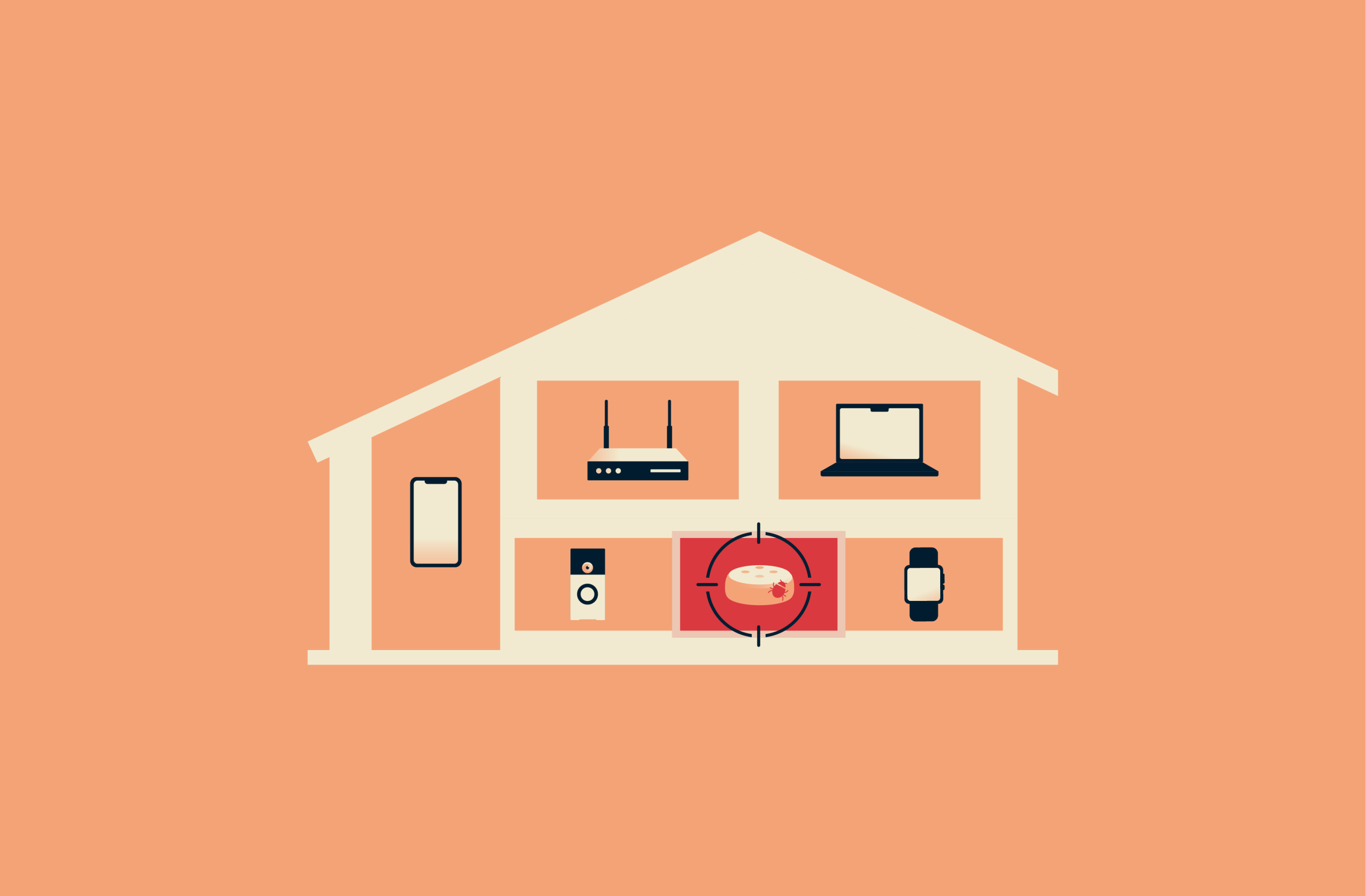
Internet of Things (IoT) devices make everyday life more convenient by connecting items like appliances, sensors, and tools to the internet. But this constant connectivity also creates new security risks that many people overlook. Weak passwords, outdated firmware, and exposed networks can give attackers easy ways to access your data or take control of your devices.
This guide explains how common IoT attacks work, and covers simple, practical steps that help reduce risks and keep your connected devices safe.
What are IoT attacks?
IoT attacks are attempts by cybercriminals to break into IoT devices. These devices include anything with a built-in computer that connects to the internet. However, it’s rare for anyone to call a tablet, laptop, or smartphone an IoT device. They usually mean everyday gadgets that you don’t use to directly interact with the internet, like smart speakers, cameras, fitness trackers, and even connected appliances.
Once an IoT device is compromised, an attacker may be able to spy on your activities, steal your information, or interfere with its functionality. Since many IoT devices run quietly in the background, attacks often go unnoticed until the damage has already been done.
Who is targeted by IoT attacks?
Anyone who uses connected devices can be a target. Because home devices often have weaker security, many attacks target regular consumers. That being said, cybercriminals also target organizations that depend on connected security systems, sensors, or smart equipment.
Industries such as healthcare, smart home companies, manufacturing, retail, finance, logistics, and education are among the most commonly targeted, as their devices often store sensitive data or control critical operations.
Typically, attackers choose victims based on opportunity rather than personal interest. Unprotected or default settings make a device an easy target. In some cases, attackers look to compromise a wider IoT network, which could comprise thousands of devices in some organizations.
Why IoT attacks are increasing
IoT attacks are rising because the number of IoT devices is continuing to grow. Many people buy smart products without thinking about IoT device security. In addition, manufacturers often rush devices to market with simple features and low prices, which can also leave gaps in protection. Due to these trends, attackers gain millions of new potential targets every year.
How do IoT attacks happen?
IoT attacks happen when a cybercriminal finds a weakness in how a device is set up, updated, or connected. Possible vulnerabilities include outdated software, weak passwords, exposed ports, or insecure communication methods. Most devices stay online 24/7, which gives attackers plenty of time to look for openings.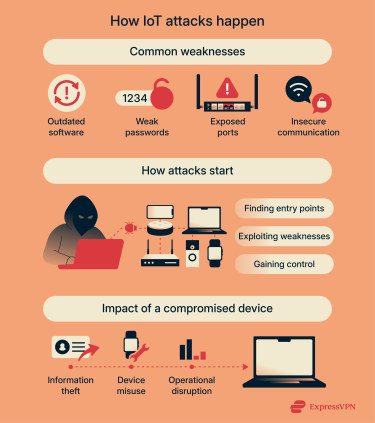
Entry points cybercriminals use
Attackers often look for the easiest path in. Here are some common entry points cybercriminals use:
- Default or weak passwords: Many devices ship with simple passwords. Attackers can guess or use automated tools to quickly gain access. A lack of multi-factor authentication (MFA) also makes it easier for attackers to gain unauthorized access.
- Open ports: Ports left exposed provide a direct route into the device, potentially letting attackers communicate (send commands the device might obey, for example) or take control.
- Outdated firmware: Devices with old firmware may contain unpatched IoT vulnerabilities, which attackers may be able to easily exploit.
- Insecure update processes: IoT devices can be exposed through the unencrypted temporary files or backups created by an improperly secured update.
- Poorly protected and managed Wi-Fi networks: Unsecured or inadequately encrypted networks allow attackers to intercept and/or manipulate data and connect and interact with devices without permission. Placing all devices on the same network can also allow attackers to use one compromised device to move laterally (through a local network) and attack critical systems. Without monitoring network activity, such malicious behavior can go undetected for long periods.
- Exposed services: Services intended for internal use can sometimes be accessed from the internet, creating unintentional gateways for attackers. For example, they might access a thermostat’s settings dashboard. This could allow a cybercriminal to see logs, device lists, and more information that shows them when people are normally at home.
- Insecure cloud dashboards or mobile apps: Weak authentication or poor IoT cloud security on apps can allow attackers to access the linked IoT devices. For instance, a vulnerable mobile app could let an attacker unlock a door remotely, create new digital keys, or view access logs showing when people enter or leave.
- Weak APIs: Vulnerable APIs let attackers indirectly control device functions or retrieve sensitive data.
Common tools and techniques used in IoT exploits
Attackers rely on automated scanners to find devices with predictable weaknesses. Other tools can guess passwords quickly or test large lists of stolen credentials. Packet sniffers capture unencrypted network traffic, revealing sensitive information like login details or device settings. Some tools also allow attackers to replay commands or inject fake firmware.
While many techniques require only basic technical knowledge, advanced IoT attacks using sophisticated exploits or coordinated strategies to bypass security measures and compromise multiple devices can also occur. Unfortunately, this means IoT devices are frequent targets of both novice and experienced cybercriminals. With such a large pool of potential attackers, it’s important to enforce layered protection and careful monitoring.
Common types of IoT attacks
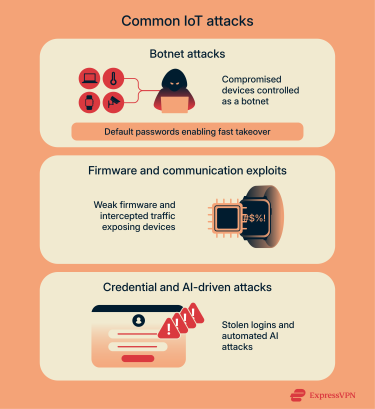 IoT device weaknesses vary by model and manufacturer, but several attack methods appear again and again across different products. Below are some common examples.
Botnet attacks
A botnet attack connects large numbers of compromised devices to work under the control of an attacker (creating their “bot” network). For example, attackers may scan the internet for vulnerable IoT devices to build up a sizable network. The creation of a botnet is often successful because many IoT devices rely on weak, factory-set passwords.
Once compromised, malware can simultaneously control thousands of devices to overwhelm websites or online services, a type of attack carried out using an IoT botnet.
Firmware exploits
Firmware is the built-in software that runs the basic functions of an IoT device, such as a smart thermostat’s temperature settings or a security camera’s recording features. Malicious access through the exploitation of flaws could allow attackers to bypass normal security checks and run unintended commands freely. They may also be able to persist in their attacks after reboots.
Some products rarely receive updates, leaving old vulnerabilities open for years and making these exploits especially dangerous.
Man-in-the-middle (MITM) attacks
A MITM attack is when a cybercriminal secretly intercepts communication between a device and the system it connects to. For example, a thief can secretly listen in on messages between a smart door lock and its mobile app.
This type of attack often exploits weak points like poor encryption and authentication. This is particularly relevant to IoT devices, as they often transmit information without strong encryption.
Credential stuffing and brute force attacks
Credential stuffing uses usernames and passwords stolen from unrelated data breaches. Attackers run these details against IoT devices and linked accounts, hoping that victims have reused these credentials. If successful, the attacker gets instant access without needing to guess anything.
Brute force attacks take a different approach by rapidly trying many password combinations until one works. These attacks are especially effective against IoT devices that use short or simple passwords and/or allow unlimited login attempts. Unfortunately, many have both of these issues.
Physical device tampering
Physical device tampering happens when someone gains direct, real-world access to an IoT device and alters its hardware or software. This can include opening the casing to reach internal ports, connecting tools that rewrite the firmware, or installing components that record or modify data.
With physical access, an attacker can bypass security checks, remove built‑in safeguards, or load malware programs that run in an obfuscated manner. Tampering is especially common with devices placed outdoors, in shared spaces, or in any other location where someone can approach the hardware without supervision.
AI-based attacks on IoT devices
AI is increasingly being used to target IoT devices. Attackers train machine‑learning (ML) models to automate reconnaissance by analyzing device traffic and spotting misconfigurations that a human might miss. It can also be used to help crack weak passwords by training it on common patterns.
Some attacks go further and use AI to bypass anomaly‑detection systems, mimic normal device behavior, or generate convincing phishing or social engineering messages that trick administrators into granting access. Because IoT devices connect through apps, dashboards, and cloud services, AI can search for weaknesses across the entire ecosystem rather than just the device itself.
How to prevent IoT attacks
Preventing IoT attacks starts with understanding that every connected device can be a potential target. The goal is to reduce exposure, make devices harder to compromise, and limit damage if an attack does occur.
Best practices for securing IoT devices
Strengthening a few basic settings can block many common threats and improve your overall IoT cybersecurity. Here are some steps you can take to protect IoT devices:
- Change default passwords: Replace factory-set passwords with long, unique ones to reduce the risk of unauthorized access. You can generate hard-to-crack passwords and store them securely with a password manager like ExpressKeys.
- Enable two-factor authentication (2FA): Add an extra verification step to prevent attackers who have stolen your credentials from being able to log in.
- Use official apps and updates: Download firmware, apps, and patches only from trusted sources to avoid accidentally installing malicious software.
- Disable unused features: Turn off remote access, voice assistants, or other services you don’t need to reduce the number of entry points.
- Monitor device activity: Review logs or notifications regularly so you can spot unusual behavior early and respond quickly.
Tip: If you want to keep your smart home safe, check out our full guide for practical protection tips.
Network segmentation and firewalls
A firewall acts as a barrier between your devices and potential threats on the internet. Configuring your home or business network to separate IoT devices from sensitive systems adds another layer of protection, reducing the ability for attackers to move laterally.
Role of regular firmware updates
Keeping devices up-to-date is essential for maintaining online security. In addition to introducing new features and functions, manufacturers release updates to fix bugs, patch vulnerabilities, and improve security. Promptly installing updates safeguards your devices from known exploits.
Many attacks succeed because devices remain on outdated firmware. Checking for updates regularly and applying them is one of the simplest yet most effective ways to keep devices secure.
Zero trust and segmentation strategies
Zero trust is a security approach where every device and user must be verified before gaining access, even within the network.
This means that if one device or user account is compromised, an attacker’s ability to move laterally and compromise other systems is limited. Applying zero trust combined with network segmentation creates a stricter, more controlled environment that reduces the overall attack surface.
Using a VPN to secure IoT device communications
A virtual private network (VPN) adds a layer of protection between your devices and the open internet by encrypting the traffic that your devices send and receive. This makes it harder for attackers to spy on data or perform MITM attacks. Additionally, a VPN conceals your actual IP address, which can reduce the likelihood of wide-scale scans targeting your network.
FAQ: Common questions about IoT attacks
What is an IoT vulnerability?
An Internet of Things (IoT) vulnerability is a weakness in a connected device that can be exploited by attackers. These weaknesses can exist in device firmware, communication protocols, or default settings, and can allow criminals to gain unauthorized access, disrupt functionality, or steal data. Maintaining the security of IoT devices requires vulnerabilities to be identified and rectified as soon as possible.
What are the four types of IoT?
The four main types of Internet of Things (IoT) are consumer, industrial, commercial, and infrastructure devices. Consumer IoT is most common and includes smart home gadgets like cameras, speakers, and air purifiers, while industrial IoT involves sensors and machines used in manufacturing or production. Commercial IoT covers devices used in businesses such as retail or healthcare, and infrastructure IoT focuses on city-wide systems like traffic lights or water management.
Which type of cyberattack is most common in IoT networks?
Botnet attacks are very common cyberattacks in Internet of Things (IoT) networks. Botnets link multiple compromised devices to work together under attacker control, often targeting websites or services with large-scale disruptions. Other frequent hacks include man-in-the-middle (MITM) attacks, credential stuffing, and firmware exploits.
Can IoT devices be hacked remotely?
Yes, Internet of Things (IoT) devices can be hacked remotely if they are exposed to the internet or connected networks lacking proper security. Attackers exploit vulnerabilities such as weak passwords, outdated firmware, or unsecured cloud services to gain remote control, often through man-in-the-middle (MITM) attacks. Poor network protection leaves even devices in private homes vulnerable to attack.
What are the biggest IoT security risks today?
The most significant Internet of Things (IoT) security risks include weak passwords, unpatched firmware, insecure communication, and excessive device access privileges. Many devices rely on default settings that attackers can easily exploit, while others lack encryption or proper authentication. Additional risks arise when multiple devices exist on a non-segmented network, making it easy for attackers to move laterally.
How can I tell if my IoT device has been compromised?
Signs of a compromised Internet of Things (IoT) device include unusual activity, unexpected network traffic, or sudden performance issues. You may notice devices turning on or off without command, unusual app notifications, or changes in settings that you didn’t make. Monitoring your devices and network regularly helps detect potential intrusions early.
Can I use a VPN to protect my IoT devices?
Yes, using a VPN can strengthen the security of Internet of Things (IoT) devices. A VPN encrypts the data your devices send and receive, which makes it harder for attackers to intercept communication. While a VPN can’t fix vulnerabilities within the device itself, it provides an added layer of protection for its online traffic, reducing exposure to network-based attacks.
Take the first step to protect yourself online. Try ExpressVPN risk-free.
Get ExpressVPN